

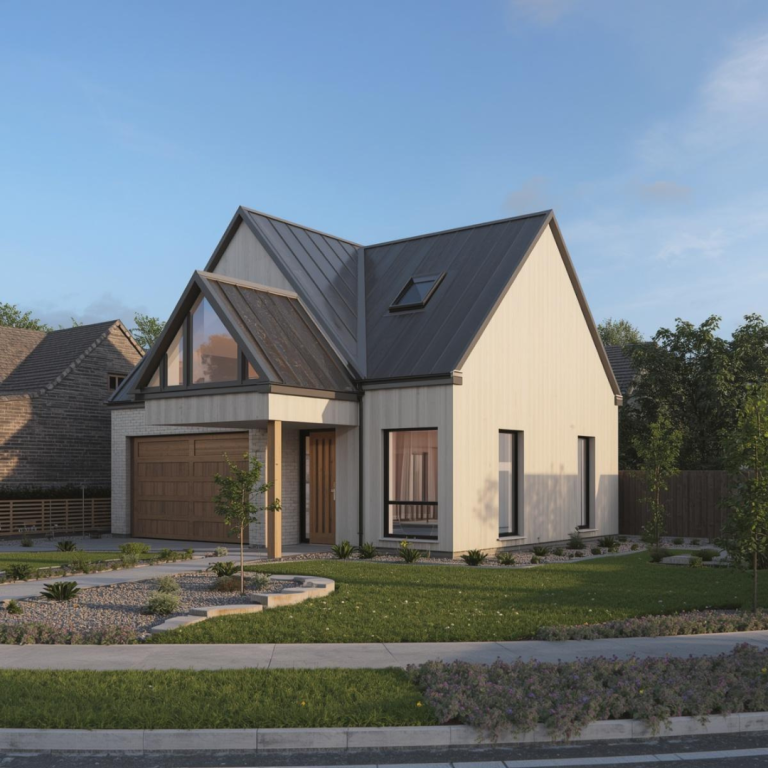
House plans are the foundation of every residential building project. Whether you are planning a new home, a dual occupancy, or an addition to an existing dwelling, clear and well-prepared house plans are essential for approvals, accurate pricing, and construction.
Despite their importance, many homeowners are not entirely sure what house plans include, why they are required, or who actually prepares them. This article breaks it down in simple terms, with a focus on how house plans are prepared and used in NSW, particularly across Western Sydney.
What are house plans and what do they include?
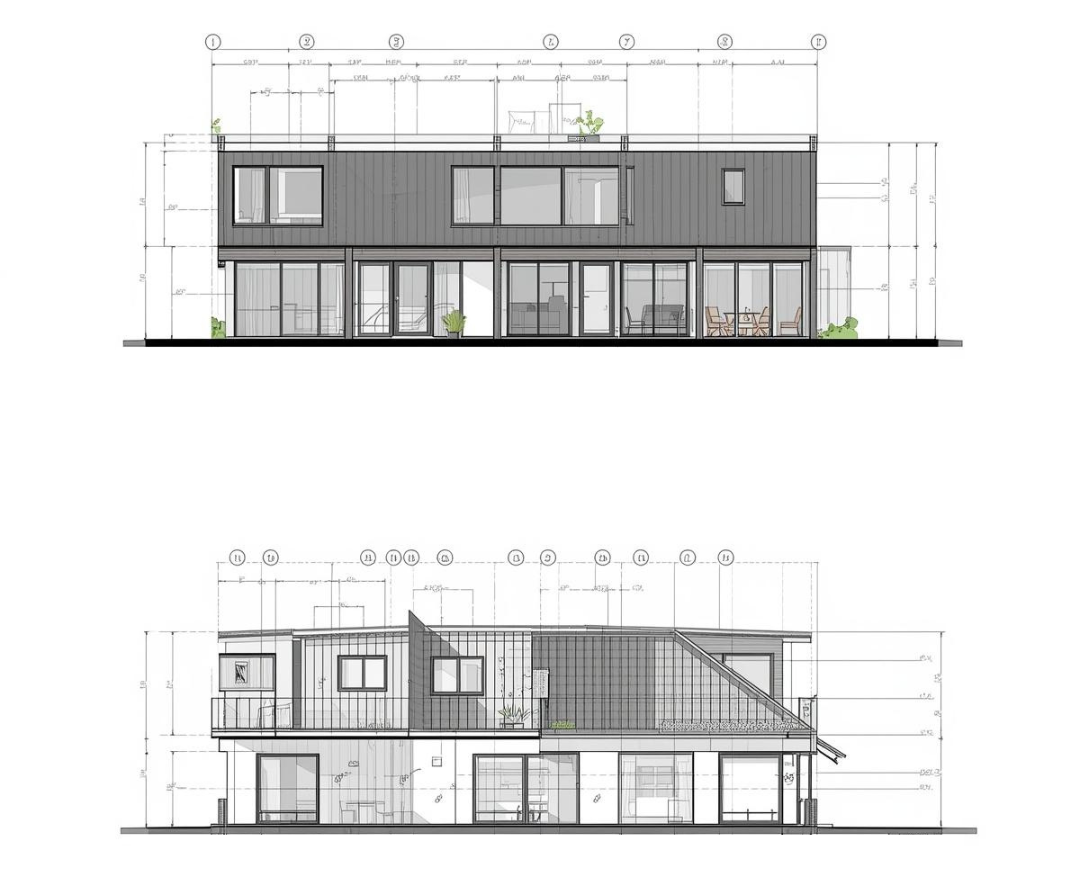
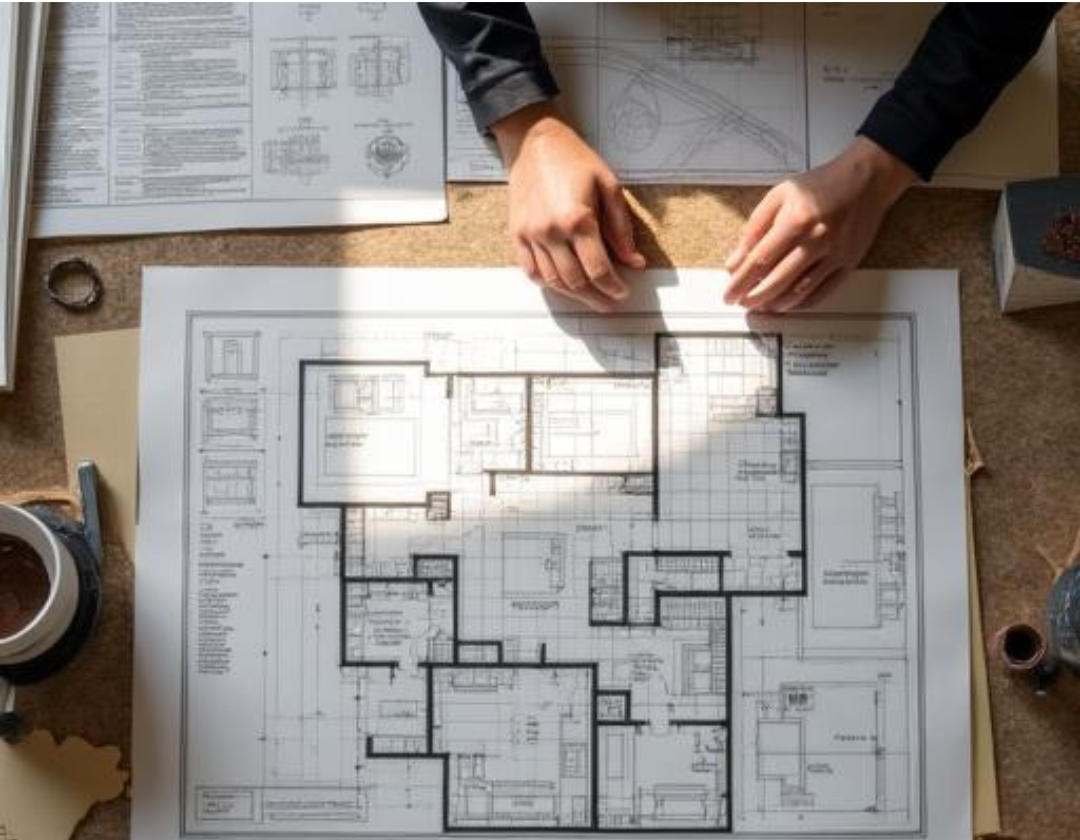
House plans are a coordinated set of drawings that explain how a home is designed and how it is to be built. They communicate layout, size, structure, and appearance, and are used by councils, certifiers, builders, engineers, and trades.
House plans include as a minimum:
- Floor plans showing room layouts and dimensions
- Elevations illustrating the external appearance of the home
- Sections explaining building heights, floor levels and construction relationships
- Site plans showing the building in relation to boundaries, setbacks, and services
- Roof plans and construction information
House plans are prepared in stages, each tailored to its audience, from early concept designs for the client through to detailed construction documentation for builders and trades.
Phase 1: Concept Design House Plans
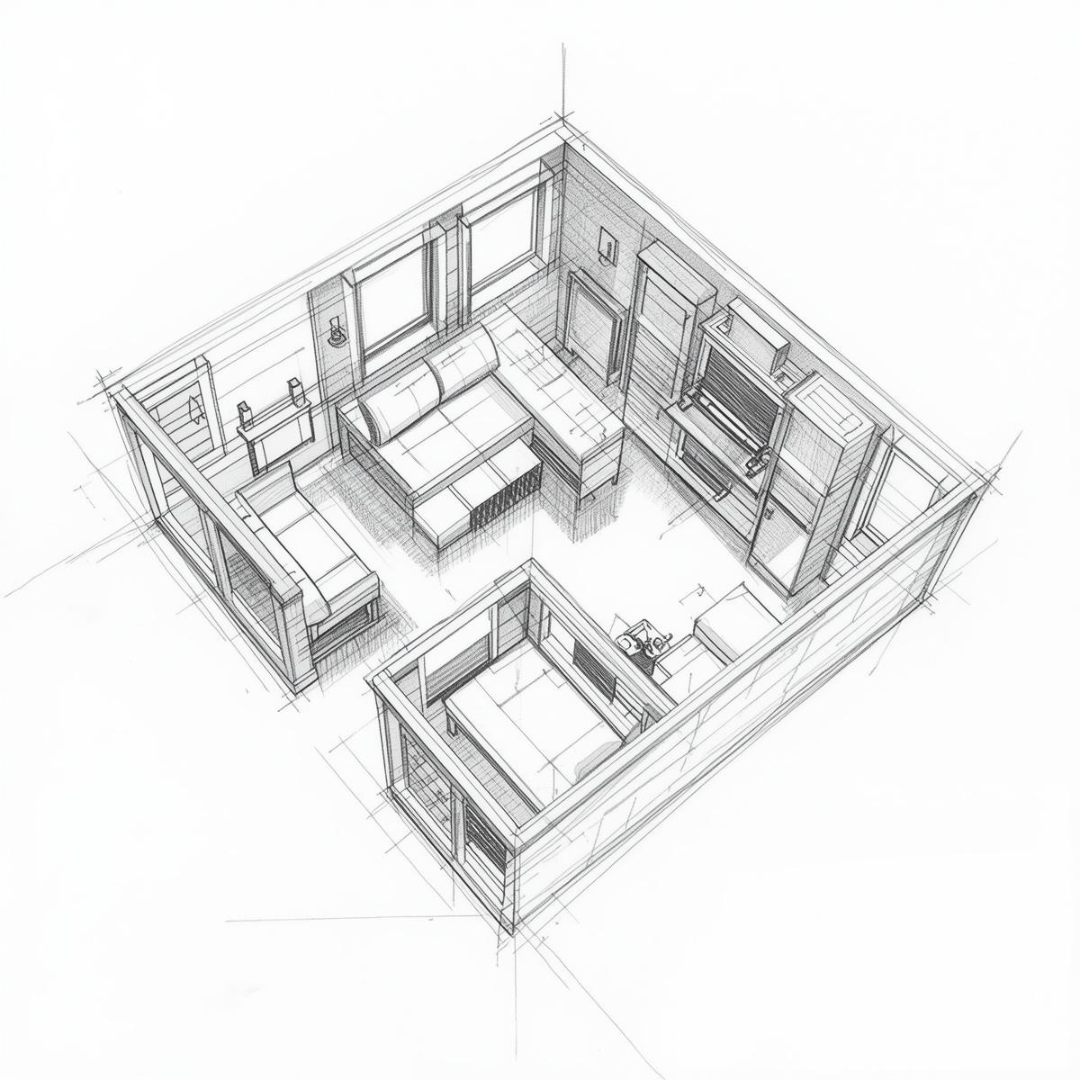
Concept Design house plans focus on what most clients want to understand first. These plans explain:
- The overall layout of the home
- The size and scale of the building
- Room sizes and how spaces relate to one another
- How the home functions day to day
- The general look and feel of the design
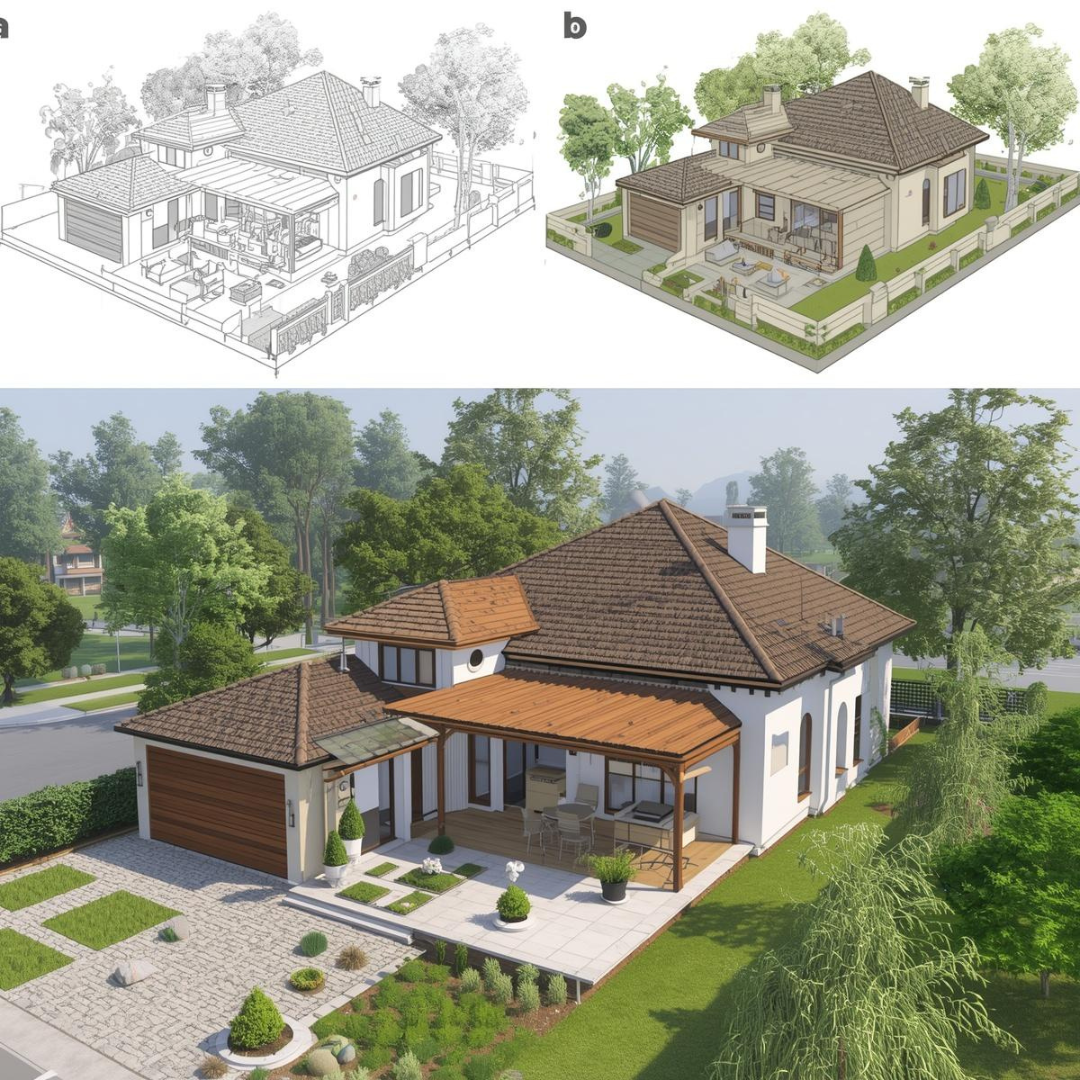
Concept Design house plans are highly visual and graphically appealing. They are intended to communicate ideas clearly rather than resolve technical details. At this stage, building and planning information is minimal, as the focus is on confirming the design direction before progressing further.
From my experience as an Accredited Building Designer, a well-resolved Concept Design does not ignore planning pathways or construction realities, even if that detail is not explicitly shown at this stage.
While Concept Design house plans are intended to communicate layout, scale and overall design intent, I am already considering how the design will perform against local planning controls, approval pathways and construction requirements. This is not presented in detail to the client at this point, but it is embedded within the way the design is developed.
My role in this phase is to guide the design toward something that can be approved and built, not just something that looks good on paper. This relies on experience, established systems and a clear understanding of how projects progress through planning, building approval and construction in NSW.
If these factors are not considered early, the project is likely to face delays, redesign or additional costs later. A strong Concept Design sets a realistic and buildable foundation, even when the drawings themselves remain simple and highly visual.
Phase 2: House Plans for DA and CDC Approval
Design Development Drawings take the approved concept and begin refining it for planning compliance.
At this stage, house plans start to include the information required for assessment by the council or a certifier. These drawings are typically used to support a Development Application or preliminary Complying Development Certificate assessment.
The focus of this phase is planning outcomes, including:
- Floor space ratio
- Setbacks and building envelopes
- Landscape area
- Building height and articulation
- Overshadowing and solar access
- Privacy and acoustic impacts
It is important to understand that during a Development Application, council is generally not assessing how a building will be constructed or how it complies with the Building Code of Australia. Their role is to assess planning compliance. Once development consent is received, the owner and Building Designer can move forward with confidence that the design can be developed for construction.
In this phase at Santolo Designs, the focus is on preparing a well-considered application that allows council to assess the proposal efficiently and with confidence. The house plans are developed to clearly address the relevant planning controls and present the design in a way that is easy for council to understand. Where variations to controls are proposed, a strong and well-reasoned justification is essential to demonstrate the merit of the design. Rather than waiting for concerns to be raised, the approach is to anticipate how council will assess the application and proactively address those considerations within the documentation.
Why house plans are required for approval and construction in NSW
You need house plans to move any residential project forward in NSW. They are not just design drawings. They form the basis of how councils, certifiers, builders and consultants assess, approve and construct your home.
Without clear and accurate house plans, you cannot obtain approval, you cannot price the project properly, and you significantly increase the risk of issues during construction.
In practice, house plans serve two critical purposes. They support planning approval, and they guide building approval and construction. Each stage requires a different level of detail, and understanding that distinction is key to avoiding delays and redesign.
House plans for Development Applications and CDC
At the planning stage, house plans allow councils or certifiers to assess whether your proposed home complies with the relevant planning controls.
We prepare house plans that clearly demonstrate how the design responds to:
- Local Environmental Plans and Development Control Plans
- Setbacks, building height and floor space ratio
- Landscape requirements and site coverage
- Solar access, overshadowing and privacy impacts
For a Development Application, council focuses on planning outcomes, not construction detail. They assess whether the proposal is appropriate for the site and surrounding context.
For a Complying Development Certificate, the assessment is more rules-based. The house plans must demonstrate strict compliance with the applicable code, such as the Codes SEPP 2008 & Housing SEPP 2021. If the design does not meet those controls, it cannot proceed under CDC.
At this stage, the role of house plans is to clearly communicate the design intent and demonstrate compliance. If this is not resolved properly, the application will be delayed, refused, or require redesign.
House plans for building approval and construction
Once planning approval is in place, house plans move into a different role. They become the foundation for building approval and construction.
We develop house plans to a level that allows a certifier to issue a Construction Certificate or final CDC approval. This requires the drawings to demonstrate compliance with the National Construction Code and relevant Australian Standards.
At this stage, the focus shifts from “Can this be approved?” to “How is this built?”
The house plans must:
- Provide enough detail for accurate builder pricing
- Clearly define structure, materials and construction methods
- Coordinate with engineering, energy reports and other consultant inputs
- Give builders and trades clear instructions on how to construct the home
If house plans are not properly resolved at this stage, it leads to variations, delays and cost increases during construction.
Well-prepared house plans bridge the gap between design and construction. They give everyone involved in the project a clear, consistent set of information to work from, reducing risk and improving the overall outcome.
Phase 3: Construction and Building Approval Plans
Construction Documentation is where house plans are fully developed for approval and building.
At this stage:
- A Complying Development Certificate is finalised, or
- A Construction Certificate is obtained following a Development Application approval
The house plans produced at this phase are detailed enough for a builder to price accurately and construct from. They address how the building will be built and how it complies with the Building Code of Australia and relevant Australian Standards.
These drawings are also tailored to suit builders and trades. The information introduced at this stage focuses on how the design is constructed in practice, including fire resistance detailing, wall and roof junctions, and key construction transitions. This ensures the documentation is clear, coordinated and can be built consistently on site while remaining compliant with the National Construction Code.
This phase forms the core set of house plans used during construction.
Phase 4: Working Drawings for Construction
Depending on the project’s complexity and level of customisation, a fourth phase may be required.
This phase is often referred to as Working Drawings and focuses on providing additional documentation to support the builder during construction. These house plans may include:
- Reflected ceiling plans
- Slab set-out plans
- Plumbing and penetration set-out plans
- Detailed junctions and construction details
- Joinery drawings
- Steel Fabrication drawings
- Frame and Truss Layout and Detailing.
The level of detail required in this phase is directly linked to how customised and unique the project is. The more tailored the design, the more critical these drawings become to ensure the home is constructed as intended.
Working drawings do not typically form part of the building approval or compliance documentation. Their purpose, as the name suggests, is to support the construction of the building by providing additional clarity to builders and trades on how the design is to be delivered on site.
This is also where volume home builders are able to reduce costs. By designing, documenting and constructing the same homes repeatedly, the required working drawings and construction details have already been resolved across multiple projects. These details are refined over time and can then be consistently replicated, reducing the need for additional documentation on each new build.
In contrast, custom projects do not benefit from repetition. Each design introduces new conditions, junctions and construction considerations, making detailed working drawings essential to achieve a clear, buildable and compliant outcome.
What homeowners need to know about the design process
For homeowners engaging a Building Designer or other professionals, understanding the phases of house plans helps set clear expectations for each stage of the project.
Each phase has a specific purpose, and knowing what should be resolved at each point allows you to focus on the right decisions at the right time. Early stages are about layout, functionality and overall design direction, while later stages address approvals, compliance and how the home will actually be constructed.
This understanding reduces uncertainty, helps avoid unrealistic expectations, and allows you to better assess whether your project is progressing as it should. It also makes it easier to communicate with your designer, builder and consultants throughout the process.
A well-managed project moves logically from concept to approval, to construction, giving you clarity and confidence at each step.
Building Designers and house plans in Western Sydney
Across Western Sydney, significant residential growth continues in areas such as Austral, Leppington, Cobbitty, Oran Park, Box Hill and Marsden Park. These locations are dominated by large master planned housing estates, where the majority of new homes are delivered through builder-led processes rather than individually commissioned design pathways.
Display home villages, such as HomeWorld, are typically positioned within or near these estates and play a key role in shaping how house plans are presented to homeowners. After purchasing land, many people visit these centres to explore layouts, sizes and finishes, often assuming this is the standard way homes are designed.
While many project and volume builders market themselves as custom home builders, the house plans on display are generally not architect-led commissions. They are typically prepared by Building Designers, either working in-house or subcontracted to specialist design practices such as Santolo Designs. These plans are developed to showcase what can be built efficiently, repeatedly, and in line with current market demand.
This model has largely defined the residential design process across Western Sydney. Builders focus on construction delivery, while Building Designers and drafting teams develop house plans that respond to planning controls, estate guidelines and buildability requirements. As a result, the majority of homes constructed in these growth areas are based on house plans prepared by Building Designers.
This reflects what we see in practice at Santolo Designs. We are actively preparing house plans across the South West Growth Region, including Austral, Leppington, Thirlmere, Wilton, Edmondson Park, Oran Park and Glenmore Park. Working closely within council areas such as Camden, Liverpool, Campbelltown, Wollondilly and Penrith, we understand how local planning controls, approval pathways and builder requirements influence how house plans are designed, assessed and ultimately constructed.


